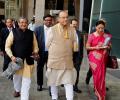
The government is going all out to spread awareness about the new indirect tax regime, and training lawmakers is being seen as a necessary first step.

How do we get back to higher trend growth? The heart of the problem lies in private corporate investment, recommends Ajay Shah.
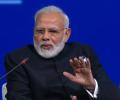
Putin said India was facing a serious problem on account of terrorism and it was not an "imaginary thing".

The branch managers have come out of their glass cabins and the sellers' market has transformed into a buyers' market, but there is no end to the harassment of customers, asserts Tamal Bandyopadhyay.
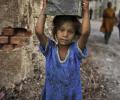
Poor predictability, credibility and effectiveness of fiscal performance have been key reasons for successive governments failing to deliver on their promises.

He said it will be 'foolhardy' to diminish institutions for short-term political gains.

What does Nobel Laureate Abhijit Banerjee thinks about India's education sector?
N R Bhanumurthy, professor of economics at the National Institute of Public Finance and Policy, and the author of the series, presented in a report to the National Statistical Commission, explains to Abhishek Waghmare various aspects of the methodology.

Accelerating inequality, the market dominance of tech platforms and remote working are likely to be the longest-lasting legacies of the COVID-19 crisis, the WEF said in a report on Monday. Releasing its Chief Economists Outlook report during the online Davos Agenda Summit, the WEF said that beyond managing the pandemic and vaccine rollout, these trends could shape a new era of fiscal, monetary, and competition policy. Deglobalisation is seen as the least likely of the current trends to continue in the longer term; particularly as international coordination is key to resolving global challenges such as vaccine manufacturing and distribution.

Developed and developing countries are very different and they are different from variety of reasons on climate change.

'There should be total transparency in the system.'

Insurance companies are seeking a separate deduction limit of Rs 1 lakh for insurance premium payment under Section 80C of the Income Tax Act in the upcoming Union Budget to bring in more people under the ambit of insurance. The insurers also want reduction in the goods and services tax (GST) rate of 18 per cent currently applied on health insurance products to 5 per cent to make such products more affordable to common people. Finance Minister Nirmala Sitharaman will present the Union Budget for 2022-23 on February 1.

Indeed, there were frauds, and the politician-banker-industrialist nexus played a role in the rise of NPAs, but governance issues in Indian banking are far more nuanced and complex, reveals Tamal Bandyopadhyay.

At a virtual press conference to launch the report, Inger Anderson, Executive Director, United Nations Environment Programme, said, "Climate change is here and now. No one is safe. Despite warnings from so many years, the world did not listen. We need to act now. Reducing greenhouse gas emissions will not only limit climate change but also reduce air pollution."

The list in 2018 contained about 7,600 names. It has been reduced to under 3,800 in the past 18 months, according to Castellum.AI, a New York-based regulatory technology company. About 1,800 of the names have been removed since the beginning of March, according to data collected by Castellum.
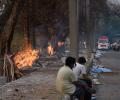
Shortage of ICU beds, oxygen, ventilators, vaccines, doctors, nurses and crematorium space in India has dominated headlines around the world in the past few weeks with Covid-19 cases surging beyond control and the government failing to deliver. Yes, election rallies, Kumbh Mela, blatant flouting of social distancing and mask protocols coupled with a messy vaccination process are said to be responsible for the health crisis of colossal proportions that India is facing today. But an analysis of Budget speeches made by finance ministers over 75 years also offers a glimpse of how low on the priority list healthcare has featured for the political class and policy-makers, which is a significant reason for the current situation.

'Look at the number of billionaires, the number of new billionaires in India.' 'Adani and Ambani are not the only ones.' 'What's wrong with people making money as long as it benefits us?'
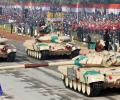
'Russia has got inherent military strength, they have a very good military equipment manufacturing infrastructure and by and large they are self-sufficient in their production capabilities'

Reform ideas do not occur overnight and evolve over the years.

Politically, it will not be easy for Modi to take hard decisions such as raising fuel prices in the first budget, given the risk of higher inflation.

The first tranche of 50 expected to arrive soon as part of efforts to strengthen bilateral cooperation in the fight against the COVID-19 pandemic
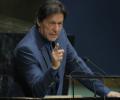
If Pakistan continues with the 'Grey List' or put in 'Dark Grey' list, it would be very difficult for the country to get financial aid from the IMF, the World Bank and the European Union, making its financial condition more precarious.

Santishree Dhulipudi Pandit won't be afraid to tangle with the toughest of them.

One thing is for sure: It smacks of the regulator's lack of confidence in the bank's board, points out Tamal Bandyopadhyay.

'James Crabtree ignores the emergence of a nexus between business and politics going back to the 1920s and talks of it as a new child of 21st century India,' says Shivanand Kanavi.

Firms that should borrow abroad do not do so enough, and those that should not borrow abroad do.

Tata Motors was the biggest gainer in the Sensex pack, rallying 2.94 per cent. It was followed by Vedanta, Bajaj Finance, Sun Pharma, ONGC, ICICI Bank, Bajaj Auto, Tata Steel, RIL, HDFC duo, L&T and SBI, rising up to 2.78 per cent.

The finance minister chaired a meeting through video conference with major private banks and NBFCs to ensure effective rollout of ECLGS and uninterrupted liquidity to Indian MSMEs in this difficult time.

Sebi has asked intermediaries to stagger the offerings as much as possible, said people in the know and ensure adequate capacity building.

Three experts on cyber security, digital forensics, networks and hardware were roped in by the Supreme Court on Wednesday to "enquire, investigate and determine" whether Pegasus spyware was used for snooping on citizens and their probe would be monitored by former apex court judge R V Raveendran.

The overriding objective of the National Investment and Infrastructure Fund (NIIF) must be adequate economic return, not financial return.
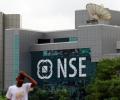
Naved Masood, former secretary in the Ministry of Corporate Affairs and Sebi board member; TV Mohandas Pai, chairman of Manipal Global Education and Dinesh Kanabar, CEO, Dhruva Advisors have ceded their position on the NSE board following end of their tenure.
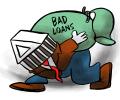
Why do we need a bad bank, owned by the banks themselves when there are at least 28 ARCs around, asks Tamal Bandyopadhyay.

After the Gujarat and Himachal elections and the municipal polls in Mumbai and Delhi, Karnataka, Rajasthan, MP and Chhattisgarh will elect new assemblies next year leading up to the Lok Sabha election in April-May 2024, points out Virendra Kapoor.
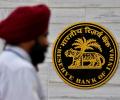
James Wilson explains why Indians are destined to silently suffer the cash shortage for half a dozen more months.
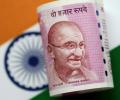
Demonetisation is the biggest reason for the rise in preference for small savings.

Stepped up public expenditure must be accompanied by focused policies, advises Vinayak Chatterjee.

The Pay Commission process is symptomatic of a national crisis within the Indian state.
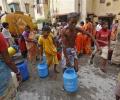
With nearly a million identified slums, UP urgently requires housing for the poor
.jpg)
Some experts believe that building new cities may not be the answer to India's swelling urban population.
